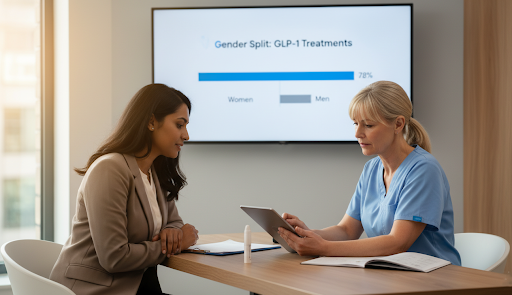
Prescription weight-loss injections have reshaped the obesity treatment landscape in just a few years. However, one pattern stands out clearly across clinics, pharmacies, and private weight management services, women are driving demand at nearly four times the rate of men.
This gap raises important questions. Why are women more likely to seek medical weight-loss treatments? Is it biological, cultural, psychological, or systemic? And what does this trend mean for the future of obesity care?
In this in-depth analysis, we explore the data, the social drivers, the medical context, and the commercial implications behind this rapidly evolving healthcare shift.
The Rise of Weight-Loss Injections in Modern Medicine
Over the past few years, GLP-1 receptor agonists such as semaglutide and tirzepatide have transformed obesity treatment. Originally developed for type 2 diabetes, these medications demonstrated significant weight-loss benefits during clinical trials. As a result, regulatory bodies began approving them specifically for weight management.
Brands such as Wegovy and Mounjaro quickly became household names. Meanwhile, Ozempic gained attention beyond diabetes care due to its off-label weight-loss effects.
These medications work by mimicking hormones that regulate appetite and blood sugar. They reduce hunger, slow gastric emptying, and improve insulin sensitivity. Consequently, patients report feeling fuller for longer and consuming fewer calories without constant willpower battles.
As availability expanded through NHS pathways and private clinics, public awareness surged. However, as prescriptions grew, so did a clear gender disparity.
Women Are Four Times More Likely to Seek Treatment
Data from private clinics and prescription platforms consistently show that women account for the overwhelming majority of weight-loss injection users. In many settings, women represent roughly 75 80% of patients requesting GLP-1 medications.
This four-to-one ratio cannot be dismissed as coincidence. Instead, it reflects deeper structural, cultural, and psychological patterns around body weight and health engagement.
Women historically engage more with healthcare services than men. They attend GP appointments more frequently, participate in screening programs, and seek preventive care more proactively. Therefore, when a new medical weight-loss option becomes available, women are more likely to explore it.
At the same time, obesity prevalence among men remains high. Yet men appear less inclined to pursue pharmaceutical weight-loss solutions unless prompted by serious health complications.
Social Pressures and Body Image Expectations
Cultural standards strongly influence weight-related decisions. Women face more intense societal scrutiny regarding body shape, appearance, and aging. From social media to advertising, messaging around thinness often targets women directly.
As a result, women may feel stronger external motivation to address weight gain earlier. This does not mean the pressure is healthy. However, it does influence healthcare-seeking behaviour.
Moreover, life stages such as pregnancy, postpartum recovery, and menopause significantly impact female weight patterns. Hormonal shifts can lead to weight gain that feels difficult to reverse through diet and exercise alone. Therefore, medical interventions can appear as structured, science-backed solutions.
In contrast, men often experience social messaging around strength and muscle rather than thinness. Consequently, men may focus more on gym-based approaches instead of pharmaceutical assistance.
Biological Factors That May Play a Role
Biology also contributes to the demand imbalance. Women generally have a higher body fat percentage than men due to reproductive physiology. Additionally, hormonal fluctuations influence appetite regulation and fat storage.
Conditions such as polycystic ovary syndrome (PCOS) increase the risk of insulin resistance and weight gain in women. In these cases, GLP-1 medications may address underlying metabolic dysfunction rather than purely cosmetic goals.
Furthermore, menopause introduces metabolic slowing and fat redistribution. Many women in their 40s and 50s report difficulty losing weight despite maintaining consistent lifestyle habits. As a result, medically supervised injections become an appealing option.
That said, men respond similarly to GLP-1 medications in clinical trials. The biological effectiveness is not gender-specific. The difference lies more in uptake than in pharmacology.
Healthcare Engagement Patterns Between Men and Women
Healthcare utilization patterns reveal another important explanation. Women typically engage with pharmacists, GPs, and private health platforms more consistently than men.
For example, women are more likely to research weight-loss treatments online, complete eligibility questionnaires, and attend consultations. They are also more open to discussing body image and health concerns with professionals.
Men, on the other hand, often delay medical appointments until symptoms become severe. Obesity may not trigger urgent action unless it leads to conditions such as hypertension or diabetes.
This behavioral difference significantly shapes prescription data. Even when both genders qualify medically, women are more proactive in seeking intervention.
The Role of Social Media and Celebrity Influence
The rapid popularity of weight-loss injections did not happen in isolation. Social media platforms amplified awareness dramatically. Influencers and public figures openly discussed their experiences, which normalized pharmaceutical weight loss.
Although conversations around medications like Wegovy and Mounjaro included both praise and controversy, women were more likely to engage in these discussions online.
Digital communities focusing on body transformation, calorie tracking, and wellness tend to skew female. Therefore, algorithm-driven content may have disproportionately reached women, accelerating demand within that demographic.
Meanwhile, men are less likely to participate in public conversations about weight management unless tied to performance enhancement or bodybuilding contexts.
Psychological Dimensions and Weight Management
Psychological drivers cannot be ignored. Women report higher levels of weight-related anxiety and body dissatisfaction compared to men. While this pattern has complex roots, it influences behavior around dieting and medical treatment.
Moreover, women are statistically more likely to attempt structured weight-loss programmes. From commercial diet plans to calorie-counting apps, women historically dominate participation.
Consequently, when pharmaceutical options emerge, they integrate naturally into an already established culture of active weight management.
However, this also raises ethical considerations. Healthcare providers must ensure that prescriptions target genuine medical need rather than purely aesthetic pressures.
Commercial and Market Implications
The gender gap significantly shapes the pharmaceutical market. Clinics tailor messaging, support services, and follow-up systems primarily toward female patients.
Marketing language often highlights confidence, lifestyle improvement, and energy levels. While these themes resonate broadly, they frequently reflect female consumer psychology.
Emerging brands, including Nevolat, are entering the broader weight management conversation as competition intensifies. As awareness grows, pharmaceutical and supplement companies continue to explore how to differentiate themselves in an increasingly crowded landscape.
However, long-term sustainability depends on clinical outcomes rather than marketing alone. Regulatory scrutiny around advertising claims remains strict, particularly in the UK.
What This Trend Means for Men
While women currently dominate demand, the obesity burden among men remains significant. Cardiovascular disease, type 2 diabetes, and metabolic syndrome affect large numbers of men who could potentially benefit from GLP-1 therapies.
Therefore, public health messaging may need recalibration. Framing weight-loss injections around metabolic health rather than appearance could increase male engagement.
Additionally, workplace health programs and GP-led discussions could play a stronger role in encouraging men to consider evidence-based weight management options.
If the gender gap narrows, demand could expand further, placing additional pressure on supply chains and prescribing frameworks.
Ethical Considerations and Responsible Prescribing
The surge in demand has sparked debate around responsible prescribing. Healthcare professionals must assess BMI, comorbidities, and lifestyle readiness before initiating treatment.
Furthermore, weight-loss injections require ongoing monitoring. They are not cosmetic quick fixes. Instead, they function as long-term medical interventions that support sustained behavioral change.
Clinicians must also address unrealistic expectations. While some patients achieve substantial weight reduction, results vary. Sustainable outcomes require dietary adjustments, physical activity, and psychological resilience.
Balancing accessibility with safety remains critical as demand continues to grow.
The Future of Gender and Obesity Treatment
Looking ahead, the gender imbalance may gradually shift. As public conversations move toward metabolic health, male engagement could rise.
Moreover, as newer medications and combination therapies enter the market, clinicians may personalise treatment strategies more effectively. Advances in obesity science continue to reshape understanding of appetite regulation and hormonal signalling.
Ultimately, the four-to-one ratio tells us less about biological differences and more about social patterns. Women have taken the lead in embracing pharmaceutical weight management. However, obesity remains a universal health issue that affects both sexes profoundly.
The next phase of this revolution will likely focus on inclusivity, long-term outcomes, and evidence-based prescribing.
Conclusion
Women driving demand for weight-loss injections at four times the rate of men highlights how health behavior, culture, biology, and marketing intersect.
On one hand, this trend reflects proactive healthcare engagement. On the other, it underscores ongoing societal pressures surrounding female body image.
As the weight-loss medication landscape evolves, providers must prioritise medical necessity, patient education, and sustainable lifestyle change.
The real story is not simply about gender. It is about how modern medicine, social expectation, and metabolic science converge in shaping healthcare decisions.