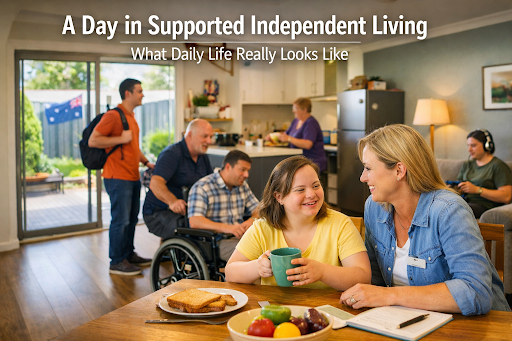
For many Australians living with disability, Supported Independent Living (SIL) offers a powerful balance between independence and personalised support. Rather than institutional care, Supported Independent Living enables people to live in their own homes often shared with others while receiving help with daily tasks, personal care, and skill development. Funded through the National Disability Insurance Scheme (NDIS) for eligible participants, SIL focuses on building confidence, routine, and quality of life in a safe, supportive environment.
But what does daily life in Supported Independent Living actually look like? Is it structured or flexible? Social or private? Clinical or homely? In reality, no two days are exactly the same and that’s the point. SIL is designed around the individual, not the system.
This guide walks you through a typical day, from morning routines to evening wind-down, so you can understand how Supported Independent Living works in real life across Australia.
Understanding Supported Independent Living in Australia
Supported Independent Living is not just accommodation it’s a comprehensive support model. Participants usually live in shared homes or individual units where trained support workers provide assistance tailored to each person’s needs.
Support may include:
- Personal care (showering, dressing, grooming)
- Meal preparation and nutrition support
- Medication management
- Household tasks
- Transport assistance
- Skill-building for independence
- Social and community participation
The goal isn’t to do everything for residents, it’s to empower them to do as much as possible themselves.
Morning: Starting the Day with Support and Choice
Personal Care and Morning Routines
A typical day in Supported Independent Living begins much like any other household. Residents wake up at times that suit their routines, not a rigid institutional schedule.
Support workers may assist with:
- Getting out of bed safely
- Showering and hygiene
- Dressing appropriately for the day
- Grooming (hair, shaving, oral care)
- Mobility equipment setup
Importantly, residents are encouraged to make their own choices about what to wear, when to shower, how to start the day.
For people with higher support needs, staff provide hands-on assistance. For others, workers offer prompts or supervision to build independence.
Breakfast and Medication Support
Breakfast is often a social time in shared SIL homes. Some residents prepare their own meals, while others receive help cooking or plating food.
Common morning activities include:
- Preparing tea, coffee, or cereal
- Cooking eggs, toast, or culturally familiar foods
- Following dietary plans
- Taking prescribed medications
Medication management is a crucial safety component. Support workers ensure medications are taken correctly and documented according to care plans.
Mid-Morning: Work, Programs, or Skill Development
After breakfast, the day branches depending on each resident’s lifestyle goals.
Employment or Day Programs
Many people in Supported Independent Living attend:
- Part-time employment
- Supported workplaces
- Volunteering roles
- Education or training
- Community day programs
Support workers may assist with transport, preparing work bags, or coordinating schedules.
For those not working, structured activities at home help maintain routine and purpose.
Life Skills Training
One of SIL’s biggest benefits is skill development. Residents may practise:
- Cooking simple meals
- Laundry and cleaning
- Budgeting and money handling
- Using public transport
- Personal organisation
- Communication skills
Rather than doing tasks for residents, staff guide them through the process, building long-term independence.
Lunch: Independence Meets Support
Lunch routines vary widely. Some residents pack meals for work or programs, while others return home to eat together.
A typical SIL lunch hour might include:
- Preparing sandwiches or simple hot meals
- Heating pre-prepared food
- Managing dietary restrictions
- Practising kitchen safety
- Social interaction with housemates
Shared meals often strengthen relationships within the home, creating a sense of family rather than facility living.
Afternoon: Community Participation and Personal Time
Outings and Social Activities
Supported Independent Living strongly emphasises participation in the broader community. Afternoon activities may include:
- Grocery shopping
- Visiting cafés or parks
- Attending therapy appointments
- Recreational activities (swimming, art classes, sports)
- Religious or cultural events
- Visiting friends or family
Support workers accompany residents as needed, ensuring safety while encouraging autonomy.
Appointments and Health Support
Many residents have regular medical or allied health appointments. SIL staff help coordinate:
- Transport
- Communication with providers
- Scheduling
- Follow-up care
This coordination reduces stress and ensures continuity of care.
Downtime and Personal Interests
Independence also means having the freedom to relax. Residents might spend afternoons:
- Watching television
- Gaming
- Listening to music
- Reading
- Gardening
- Using computers or tablets
- Pursuing hobbies
Privacy is respected, especially in homes where residents have their own rooms or units.
Evening: Home Life and Routine
Dinner Preparation
Evenings in Supported Independent Living often revolve around food and connection. Residents may cook together or prepare individual meals depending on preferences and abilities.
Support workers assist with:
- Meal planning
- Grocery use
- Cooking techniques
- Safe appliance use
- Cleaning up
Cooking together can be both practical and therapeutic, building confidence and social skills.
Household Tasks
Shared homes function like any household, with chores distributed according to ability:
- Washing dishes
- Taking out rubbish
- Laundry
- Tidying communal areas
- Room cleaning
These tasks reinforce responsibility and daily living skills.
Night: Wind-Down and Safety
Leisure and Social Time
Evenings may include:
- Watching movies or TV shows
- Board games or puzzles
- Phone or video calls with family
- Group chats with housemates
- Quiet time in private rooms
Some homes organise regular social nights, takeaway dinners, or celebrations for birthdays and holidays.
Personal Care and Bedtime
Support workers assist with nighttime routines:
- Showering or toileting support
- Changing into sleepwear
- Medication administration
- Mobility assistance
- Setting alarms or assistive devices
Bedtimes vary based on individual preference not institutional rules.
Overnight Support: Peace of Mind Around the Clock
Many Supported Independent Living homes provide overnight staff, especially for residents with higher needs.
Overnight support may include:
- Assistance with toileting or repositioning
- Monitoring health conditions
- Emergency response
- Medication needs
- Reassurance for anxiety or sleep difficulties
Some homes use sleepover staff, while others provide active overnight care.
Social Dynamics in Shared SIL Homes
Living with others can be one of the most rewarding aspects of Supported Independent Living.
Residents often form strong bonds through:
- Shared meals
- Group outings
- Celebrations
- Everyday conversations
- Mutual support
However, privacy and boundaries are equally important. Quality SIL providers carefully match housemates based on compatibility, interests, and support needs.
How Supported Independent Living Builds Real Independence
Contrary to common misconceptions, SIL is not about dependency. It’s about building capability.
Participants often gain:
- Confidence in daily tasks
- Decision-making skills
- Social competence
- Community connection
- Emotional wellbeing
- Long-term life skills
For many families, SIL represents a positive transition into adulthood or greater autonomy.
Who Is Supported Independent Living Suitable For?
Supported Independent Living is typically suited to people who:
- Need daily support to live safely
- Want to live outside the family home
- Benefit from structured routines
- Require supervision or assistance
- Value social living environments
Support levels range from occasional assistance to 24/7 care.
A Realistic Picture: It’s Not One-Size-Fits-All
Every Supported Independent Living arrangement is unique. Factors that shape daily life include:
- Individual goals
- Cultural preferences
- Disability type
- Personality
- Household dynamics
- Level of support required
- Location and community access
Some homes feel busy and social; others are quiet and independent.
Choosing the Right SIL Provider Matters
Quality of life in Supported Independent Living depends heavily on the provider’s approach. The best providers prioritise:
- Person-centred care
- Consistent, trained staff
- Respect for autonomy
- Cultural sensitivity
- Clear communication
- Safety and compliance
- Opportunities for growth
Organisations such as EasAbility focus on tailoring support to the individual, ensuring participants don’t just live safely they live meaningfully.
Final Thoughts
A day in Supported Independent Living isn’t about strict routines or clinical care, it’s about ordinary life made accessible. From morning coffee to evening relaxation, SIL empowers Australians with disabilities to live with dignity, independence, and connection.
For participants and families considering this pathway, understanding the day-to-day reality can ease uncertainty. With the right support in place, Supported Independent Living becomes more than a service; it becomes a home, a community, and a foundation for a fulfilling life.