
Starting a business is exciting, but getting investors is often the hardest part. Many great ideas fail because the plan behind them is weak. Investors want more than passion and clarity. They want proof that your idea can grow and make money. Here is an interesting fact,
Studies show that startups with a clear business plan grow 30% faster than those without one. Also, about 70% of investors say the business plan is the first thing they review before making any decision.
That means a strong plan is not just a document. It is your first impression, and sometimes, it decides whether your idea moves forward or stops right there.
Why Investors Always Ask for a Business Plan
Investors see hundreds of ideas every year. They cannot fund every idea they hear, so they look for signals. A business plan helps them understand three simple things:
- What your business does
- How will it make money
- Why can it succeed in the market
When investors read a plan, they want to see logic. They want to see research and want to see that the founder understands the risks.
A clear plan builds trust. Without a plan, your idea may sound interesting. But with a plan, it starts to look real.
What Investors Look for in a Business Plan
Investors usually check a few important things. Here is a simple breakdown.
| What Investors Check | Why It Matters |
| Clear business idea | Shows you understand your product |
| Market demand | Proves people will buy |
| Revenue model | Explains how money will be made |
| Competition | Shows awareness of the market |
| Growth plan | Shows future potential |
A plan that answers these questions clearly always stands out.
What Investors Focus On in a Business Plan

This graph shows a simple truth. Investors care more about market opportunity and revenue than just the idea itself.
The Key Sections of an Expert Business Plan
A good business plan is clear and organized. Investors should understand it quickly. This is why many founders try to create an Expert Business Plan. It is simple, but it explains everything that matters.
Let’s look at the main sections investors expect to see.
- Executive Summary
This is the first page of your plan. It gives a quick overview of your business. Think of it as a short story about your idea. It should explain:
- What your business does
- Who your customers are
- How will you make money
- Why your idea is strong
Keep it short because investors like clear and simple summaries.
- Business Description
Here you explain your company in more detail.
- Talk about your mission.
- Explain the problem your product solves.
Also, explain what makes your idea different from others in the market.
- Market Research
Investors want proof that people need your product. You should show:
- Market size
- Customer demand
- Industry trends
Numbers help a lot here. They show that you did real research.
- Product or Service
Now explain what you sell. Describe the product clearly. Show how it works and why customers will like it. If possible, show how your product is better than others.
- Marketing Strategy
This section explains how people will find your business. You can talk about:
- Social media marketing
- Online advertising
- Partnerships
- Email marketing
Investors want to see that you have a plan to reach customers.
Simple Business Plan Structure
| Section | What It Explains |
| Executive Summary | Quick overview of the business |
| Business Description | What the company does |
| Market Research | Demand and industry data |
| Product or Service | What you sell |
| Marketing Strategy | How will you reach customers |
| Financial Plan | Revenue and costs |
A clear structure makes your plan easy to read. Investors appreciate that.
Why Startups Fail
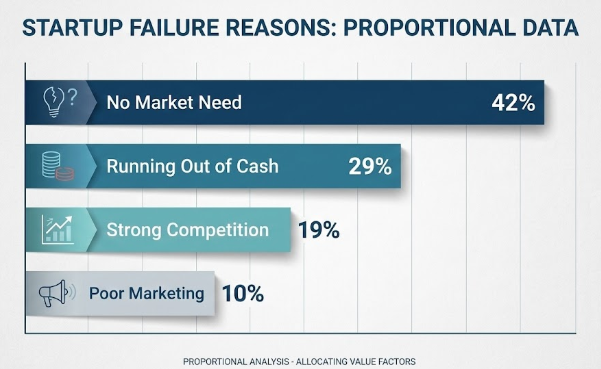
This graph shows something important. Many businesses fail because they do not understand the market. A strong business plan helps avoid this problem.
Show Clear Financial Numbers
Investors always look at the numbers. They want to know one simple thing.
Can this business make money?
You do not need very complex math. But you should show clear and realistic numbers.
Your plan should include:
- Expected sales
- Monthly costs
- Profit estimates
- Break-even point
These numbers help investors understand the future of the business. For example, you can show how your revenue may grow over time.
| Year | Estimated Revenue | Estimated Profit |
| Year 1 | $80,000 | $10,000 |
| Year 2 | $150,000 | $35,000 |
| Year 3 | $300,000 | $90,000 |
Simple tables like this make your plan easy to understand.
How to Create Business Plans That Investors Trust
Writing a plan is not just about filling pages. It is about building trust. Good business plans for investor focus on clarity. They explain the idea in a simple way. They also show real research and realistic goals.
- Here are a few helpful tips:
- Keep Everything Simple
Do not use complicated words. Investors read many plans every week. Simple language makes your plan easier to follow.
- Use Real Data
Numbers make your plan stronger.
Market size, customer demand, and industry trends help investors see the opportunity.
- Be Honest About Risks
Every business has risks. Smart founders talk about these risks and explain how they will manage them. This shows maturity and planning.
- Focus on Growth
Investors are interested in growth. Explain how your business can expand in the future. This could include new markets, new products, or partnerships.
When investors see growth potential, they become more interested.
Common Mistakes to Avoid
Many founders have great ideas. But small mistakes in the business plan can push investors away. Here are some common problems.
- Making the Plan Too Long
A business plan should be clear and focused. If it becomes too long, investors may lose interest. Try to explain your idea in a simple way.
- Using Unrealistic Numbers
Some founders show very big revenue numbers without proof. Investors notice this quickly. It is better to show realistic growth.
- Ignoring the Competition
Every market has competitors. If your plan says you have no competition, investors may not trust it. Instead, explain how your business is different and better.
- Not Explaining the Customer
Your business needs customers to survive. Always explain who your customers are and why they will buy from you.
Frequently Asked Questions
- What is the most important part of a business plan for investors?
The most important part is the executive summary and financial plan. Investors want to quickly understand your idea and see how the business will make money.
- How long should a business plan be?
A good business plan is usually 10 to 20 pages long. It should be clear, simple, and focused. Investors prefer plans that explain ideas quickly and clearly.
- Do investors really read business plans?
Yes, many investors review business plans before making a decision. A well-written plan helps them understand the market, the opportunity, and the business’s future growth.
It’s A Wrap
A great idea alone is not enough to win investors. What truly makes a difference is a clear and well-structured business plan. When your plan explains the problem, the market, the solution, and the financial future, investors start to see the real potential. They begin to trust the idea and the person behind it.
Keep your plan simple, use real numbers, and explain your vision for growth.
When all these pieces come together, your business plan becomes more than just a document. It becomes the story of a business that investors want to support.