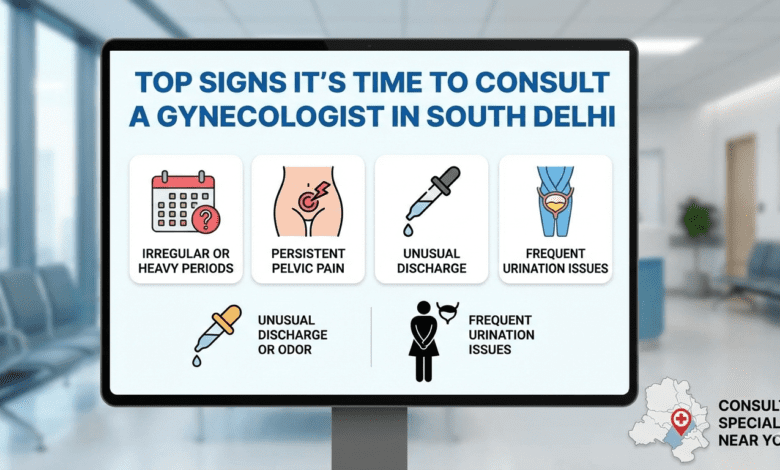
I’ve been a gynecologist in Delhi for quite a while now, and one thing I see constantly is how women put off coming in even when their body is clearly trying to tell them something’s not right. The signs are usually subtle at first, then louder but too many brush them off as “normal,” “just hormones,” “stress,” or “part of getting older.” The longer you wait, the more complicated things can become. Early checks almost always mean simpler tests, easier fixes, better chances of protecting fertility, and a lot less worry later.
South Delhi has good gynecological care close at hand experienced doctors, quick access to ultrasound and labs, and clinics where follow-ups don’t feel like a big ordeal. If any of these signs are showing up and they’re not going away, are getting worse, or are starting to affect your normal day, it’s time to stop waiting.
Periods That Are No Longer Predictable or Have Become Extreme
Your cycle should be fairly steady in timing, amount, and discomfort. When it drifts far from that pattern, pay attention:
- Cycles that regularly come every 2 weeks or less, or stretch beyond 35–40 days for months on end.
- Bleeding that drags on longer than a week or is so heavy you’re changing pads/tampons every hour or two.
- Cramps so intense they stop you from functioning normally and force you to rely on strong painkillers every month.
- Large clots or bleeding/spotting in between periods.
- Flow that suddenly gets much heavier, much lighter, or much more painful after years of being the same.
These are common flags for PCOS, thyroid issues, fibroids, polyps in the uterus, adenomyosis, endometriosis, or hormone imbalances. A simple ultrasound and blood tests can usually spot the cause early before anemia creeps in, fertility becomes harder, or surgery turns into a bigger deal.
Discharge, Smell, or Itching That Keeps Coming Back
Normal discharge is mostly clear or white and doesn’t have a strong smell. When it changes noticeably or won’t settle:
- Much more volume than usual, turning yellow/green/grey with a fishy or yeasty odour.
- Thick white, cottage-cheese discharge paired with really bad itching (typical yeast).
- Non-stop itching, burning, redness, or swelling around the vulva/vaginal opening.
- Any discharge that has blood in it when it’s not your period.
Most of these turn out to be bacterial vaginosis, candida, trichomonas, or sometimes cervicitis. A quick swab and the right treatment usually clear it fast. Letting it go can lead to long-term soreness, repeated infections, or (rarely) let something more serious slip through.
Pain During Sex or Ongoing Pelvic Ache
Pain with intercourse or constant pelvic discomfort is never something you should just accept:
- Deep aching or sharp pain inside during penetration.
- Burning or soreness right at the entrance.
- Lower belly or pelvic pain that isn’t linked to your cycle and sticks around.
Common reasons include endometriosis, adenomyosis, chronic pelvic infection, ovarian cysts, fibroids, scar tissue from old surgery, or dryness from low estrogen (especially near menopause). A good exam, ultrasound, and sometimes laparoscopy can find the cause and give real relief before it starts affecting relationships or everyday comfort.
Breast Changes That Feel New or Worrying
Any breast symptom should be checked quickly:
- New lump, thickening, or hard spot in the breast or under the arm.
- Nipple discharge (especially bloody, clear, or coming without squeezing).
- Skin changes, orange-peel look, dimpling, redness, or swelling.
- Nipple pulling inward or a rash/crusting that won’t heal on the nipple/areola.
Most lumps are harmless (cysts, fibroadenomas), but exam + ultrasound (under 40) or mammogram (over 40) gives certainty. Early checks make all the difference if something serious is present.
Bladder or Bowel Symptoms That Feel Tied to the Pelvis
When urinary or bowel issues start appearing with gynecological ones:
- Going to the toilet very often, sudden urgent need, feeling like you can’t fully empty, or repeated UTIs as an adult woman.
- Leaking urine when you cough, sneeze, laugh, or exercise (stress incontinence).
- Struggling to pass stool, needing to push hard, feeling of incomplete emptying, or having to press on the vagina/perineum to go.
- Heavy, dragging sensation or something bulging out from the vaginal opening (prolapse).
These often come from pelvic-floor weakness after childbirth, long-term constipation, or tissue changes around menopause. A gynecologist who knows pelvic-floor issues can check and offer physiotherapy, pessary, or surgery if needed.
Trouble Getting Pregnant or Multiple Early Losses
If you’ve been trying for 12 months (or 6 months if you’re over 35) without success, or you’ve had two or more miscarriages, it’s time for a proper look:
- Very irregular or completely absent ovulation (PCOS is the most common cause in India).
- Blocked or damaged fallopian tubes (from past infection, endometriosis, or surgery).
- Uterine shape problems (septum, fibroids pushing into the cavity, adhesions).
- Hormone imbalances (thyroid, high prolactin, low progesterone).
Basic tests, hormone bloods, ultrasound, HSG, and partner semen check usually show what’s happening. Many couples do well with straightforward help.
Any Bleeding After Menopause
Once periods have stopped for a full 12 months, any vaginal bleeding is abnormal until proven otherwise. It can be harmless (atrophic vaginitis from low estrogen) or it can be endometrial hyperplasia or cancer. A transvaginal ultrasound and endometrial biopsy usually sort it quickly.
If any of these are going on, especially if they’re sticking around, getting worse, or starting to disrupt your normal day, don’t keep waiting for it to “go away on its own.” Early checks make everything quicker to diagnose, easier to treat, and outcomes better.
Call today Gynecologist in Lajpat Nagar New Delhi, many women find the care there practical and thorough.
Consult Best female gynecologist in South Delhi for a detailed history, careful exam, and the right tests tailored to your symptoms.
Lajpat Nagar’s central spot makes coming back for follow-ups easy for most women across South Delhi.
Addressing things early often turns something that feels worrying into something straightforward and completely manageable.
Listen to your body when something doesn’t feel right for too long, it’s worth getting checked.