Choosing the correct pressure washer is not always easy. Some machines are made for light washing, while others can remove oil, grease, paint, and heavy dirt. If the pressure is too low, the job may take much longer. If it is too high, it can damage the surface.This is why PSI matters. PSI means pounds per square inch. It tells you how much pressure the machine uses to push water onto a surface. A higher number means a stronger water stream.
However, the highest PSI is not always the best choice. A restaurant walkway, delivery truck, building wall, and warehouse floor all have different cleaning needs. Weather conditions in New Jersey can also leave salt, mud, algae, and road grime on commercial surfaces. The machine must match both the dirt and the material underneath it.
This guide explains common PSI ranges for different commercial cleaning tasks. It also covers water flow, nozzles, heat, and other details that affect cleaning results.
PSI Is Only One Part of Cleaning Power
Many people focus only on PSI when comparing pressure washers. Pressure is important, but it does not tell the full story. Water flow also matters.Water flow is measured in gallons per minute, or GPM. PSI helps break dirt away from a surface. GPM helps rinse that dirt away. A machine with strong pressure but low water flow may loosen grime without clearing it quickly.
For example, imagine cleaning a large parking area. High PSI may remove dirt from one small spot, but a higher GPM can move dirty water and loose material across the surface faster. This may reduce the total time needed for the job. A knowledgeable commercial cleaning equipment dealer can help you compare PSI and GPM together. You should explain the surface, the size of the area, and the kind of buildup you need to remove.
A Quick Guide to Common PSI Ranges
The following ranges are general starting points. The correct setting can change based on the surface condition, nozzle, distance, water temperature, and cleaning product.
| Commercial cleaning task | Suggested starting range |
| Windows and delicate surfaces | 500–1,000 PSI |
| Outdoor furniture and signs | 1,000–1,500 PSI |
| Cars, vans, and light-duty vehicles | 1,200–1,900 PSI |
| Building siding and painted surfaces | 1,300–2,000 PSI |
| Decks, fences, and wood surfaces | 1,200–2,000 PSI |
| Commercial equipment and machinery | 1,500–3,000 PSI |
| Brick and masonry | 2,000–3,000 PSI |
| Concrete floors and sidewalks | 2,500–4,000 PSI |
| Oil, grease, and industrial buildup | 3,000–4,000 PSI |
These are not fixed rules. Always begin at the lower end of the range. Test a small hidden area before cleaning the full surface.
Windows and Other Delicate Surfaces
Commercial windows usually need much less pressure than concrete or machinery. A setting between 500 and 1,000 PSI may be enough for loose dirt, dust, and light outdoor buildup. Glass can crack if pressure is too high or if the water hits a weak edge. Window seals and older frames can also be damaged. For this reason, keep the spray at a safe distance and use a wide-angle nozzle.
Low pressure combined with the correct detergent may work better than force alone. Apply the cleaner, allow it to loosen the dirt, and rinse it away gently. Never direct a strong stream toward broken seals or damaged glass. The same careful approach should be used for store signs, decorative panels, awnings, and older painted surfaces.
Company Cars, Vans, and Work Trucks
Business vehicles collect dust, road salt, insects, mud, and traffic film. In many cases, 1,200 to 1,900 PSI provides enough power for routine washing.Start with a wide spray and keep the nozzle moving. Holding the stream in one place may harm paint, trim, decals, or rubber seals. Extra care is needed around mirrors, lights, door edges, and company graphics. Large trucks and construction vehicles may need more pressure when they are covered in thick mud. Even then, it is safer to soften the dirt first. A suitable detergent can break down road film and oily buildup, allowing the water to rinse it away without extreme force.
In winter, New Jersey vehicles may carry road salt underneath the body and around the wheels. Good water flow is useful here because it helps flush salt out of hard-to-reach areas.
Building Siding and Painted Walls
Commercial siding can often be cleaned between 1,300 and 2,000 PSI. The exact amount depends on the material and its condition. Vinyl siding usually does not need very strong pressure. Too much force can push water behind the panels or damage loose sections. Painted walls also need care because a narrow, powerful stream may remove paint. Stand at a reasonable distance and use a wide-angle nozzle. Begin with low pressure, especially on older buildings. If dirt remains, move closer slowly or increase the pressure in small steps.
When mold, mildew, or algae is present, detergent often makes more sense than higher PSI. The cleaner can treat the buildup while lower pressure protects the wall. Avoid spraying directly into vents, electrical boxes, doors, windows, and wall openings. Water entering these areas may cause problems inside the building.
Wood Decks, Fences, and Outdoor Areas
Wood is easier to damage than it looks. Pressure that is too high can cut into the grain, leave bright marks, or create a rough surface. A starting range of 1,200 to 2,000 PSI may work for many commercial decks, fences, and wooden seating areas. Soft wood and older boards may require even less.
Use a wider nozzle and follow the direction of the wood grain. Keep the nozzle moving at an even speed. If one section is cleaned for longer than another, the wood may develop visible lines. Distance matters as much as pressure. Moving the nozzle closer makes the water hit harder. Test a hidden area first, and do not assume that every board has the same strength.
Commercial Machinery and Work Equipment
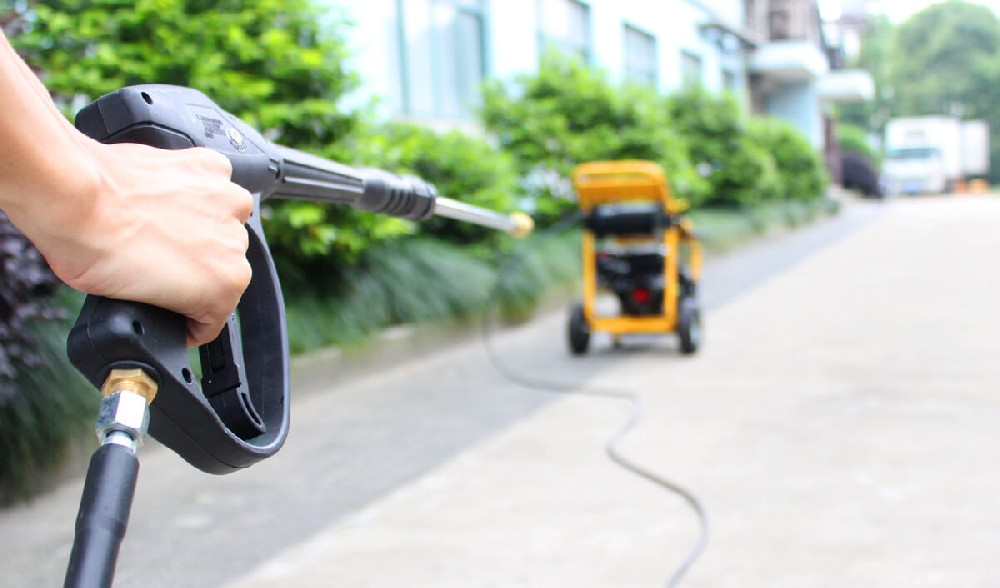
Machinery can collect grease, oil, dust, and soil. Depending on the equipment, a range of 1,500 to 3,000 PSI may be suitable. Light dirt on painted equipment may only need moderate pressure. Heavy buildup on durable metal parts may require more. However, high pressure should not be aimed at bearings, control panels, warning labels, exposed wiring, seals, or sensitive engine parts.
Before washing machinery, check its cleaning instructions. Cover electrical parts when needed and make sure the machine is turned off safely. An experienced industrial wash equipment source may recommend hot-water equipment for oily machinery. Hot water can soften grease more effectively than cold water. This means the job may not need the highest possible PSI.
Brick, Block, and Masonry
Brick and masonry often need between 2,000 and 3,000 PSI. These surfaces appear strong, but damaged mortar and older bricks can break under heavy pressure. Begin with a wide spray and test an area that is not easy to see. Watch for loose mortar, surface flaking, or color changes. If the material starts breaking away, lower the pressure immediately.
A pressure washer can remove dirt, algae, and some surface stains from brick. Deep stains may require a cleaner made for masonry. More pressure is not always the answer. Water can also enter cracks and gaps. During cold New Jersey weather, trapped water may freeze and expand. Therefore, damaged masonry should be repaired before deep cleaning whenever possible.
Concrete Floors, Loading Areas, and Sidewalks
Concrete is one of the strongest surfaces found around commercial properties. It often needs between 2,500 and 4,000 PSI, especially when it has old dirt, tire marks, mud, or light oil stains. A warehouse floor may require a different setup than an outdoor sidewalk. Indoor work needs careful water control, good drainage, and proper ventilation. Outdoor concrete usually allows more room for water and loose dirt to move away.
A surface cleaner attachment can be useful on large, flat areas. It spreads the water through rotating spray bars and creates a more even finish. It may also reduce the lines that appear when a standard wand is moved at an uneven speed. Do not use maximum pressure on cracked or weak concrete. A strong stream can make existing damage worse. Fresh concrete should also be allowed to cure fully before pressure washing.
Oil, Grease, and Heavy Industrial Dirt
Thick grease and oil are among the hardest materials to remove. Heavy-duty jobs may need 3,000 to 4,000 PSI, but pressure alone may still leave a stain behind. Heat, detergent, and dwell time are especially important for this type of cleaning. Dwell time is the short period when a cleaner remains on the surface and breaks down the buildup. The product must not be allowed to dry.
A hot-water pressure washer can be very helpful in garages, workshops, food-service areas, and industrial spaces. Hot water loosens oily material so it can be rinsed away more easily. Before beginning, consider where the dirty water will go. Oil, grease, and chemicals should not be washed into a storm drain. The work may require water collection or another approved disposal method.
Nozzle Choice Can Change the Pressure
Two workers can use the same pressure washer and get very different results. The nozzle is often the reason. A narrow nozzle places the water in a small area, making the stream more powerful. A wider nozzle spreads the water and lowers its effect on the surface. This makes wide-angle tips better for siding, vehicles, and other materials that can be damaged.
A zero-degree nozzle creates a very narrow stream. It can cause serious injury and surface damage, so it is not a normal choice for general commercial cleaning. Nozzles also wear out. A worn nozzle may lower cleaning power or create an uneven spray. Check it before starting a large job and replace it when the pattern no longer looks correct.
When Hot Water Is Better Than More PSI
Increasing the PSI is not the only way to improve cleaning. Hot water may produce better results on grease, oil, food residue, and certain industrial stains. Think about washing a greasy pan. Cold water may move some dirt, but warm water breaks down the grease faster. A hot-water pressure washer works in a similar way.
Cold-water machines are still useful for dust, mud, loose dirt, siding, and many outdoor tasks. They are often simpler and less costly to operate. Hot-water units are better when oily material is the main problem. Pressure King can help New Jersey businesses compare hot- and cold-water pressure washers based on the actual work involved. Choosing the right temperature may reduce cleaning time and the need for repeated passes.
Renting or Buying the Right Machine
A business that pressure washes every week may benefit from owning equipment. A company with only a few seasonal projects may find renting more practical. Before choosing, think about how often the machine will be used, where it will be stored, and who will maintain it. Commercial pressure washers need regular care, including pump checks, oil changes, nozzle inspection, and winter protection.
When speaking with a local pressure washer supplier, describe your most common cleaning task instead of simply asking for the strongest machine. This gives the supplier better information and helps prevent you from paying for power you do not need. Pressure King offers cleaning equipment, rentals, parts, and service for commercial users in New Jersey. Businesses should still compare machine size, power source, water flow, and support before making a final choice.
Use Pressure Washing Equipment Safely
A commercial pressure washer can cause serious injury. Never point the wand toward yourself, another person, or an animal. The water stream can cut skin even when the injury looks small from the outside.
Wear closed, slip-resistant footwear and eye protection. Keep both hands on the wand when the machine produces a strong kickback. Check hoses, fittings, and trigger controls before use. The work area should be kept clear of customers and other workers. Use warning signs when floors or walkways are wet. Never spray electrical equipment, power lines, or working outlets. If the operator has not used the machine before, ask for a demonstration. A few minutes of training can prevent damage, injury, and wasted time.
Final Thoughts
The correct PSI depends on the surface and the type of dirt. Windows and painted materials need gentle pressure, while concrete and heavy industrial buildup can handle more power. Still, starting with a lower setting is usually the safest approach. PSI should also be considered with GPM, nozzle size, spray distance, water temperature, and detergent. These details work together. A balanced setup often cleans better than a machine that only offers very high pressure.